The Galapagos Islands are quite possibly one of the best places in the world for birdwatching. Thanks to millions of years of isolation, the islands are home to a spectacular range of birds that are found nowhere else on Earth. Additionally, and given the absence of predators, they’ve evolved in such a way that they’re now completely fearless and docile in the presence of humans. From the beaches to the cliffs to the open waters, the diversity of bird species and their behaviors is one of the main reasons visitors fall in love with these islands.
Whether you are a birdwatching enthusiast or simply curious to experience such unusual wildlife behavior, the birdlife of the Galapagos is guaranteed to leave a lasting impression on you! So, without further ado, we welcome you to the fantastic world of Galapagos birds that is stunning, mesmerizing, and full of wonders.

Top Galapagos Birds to Look Out For
The Galapagos Islands offer unusually close encounters with some of our planet’s most remarkable birds. You’ll quickly find that birds in Galapagos play a role in the ecosystems found throughout the archipelago and offer incredible opportunities for wildlife observation and photography. Visible on land, at sea, and along the rocky shores, here are some of the top feathery species to keep an eye out for in Galapagos:
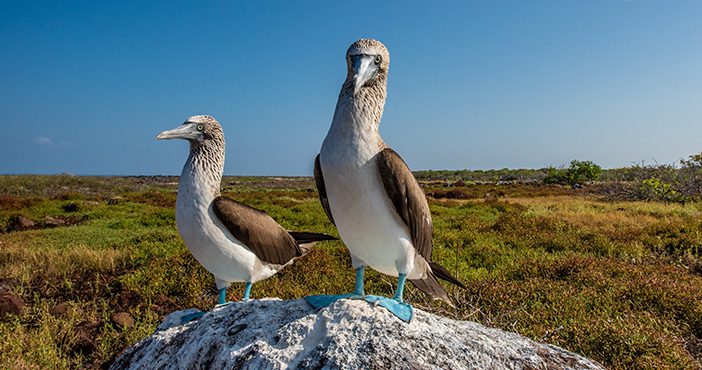
- Blue-footed Booby: Famous for their bright blue feet and entertaining courtship dances.
- Red-footed Booby: The smallest of the booby species, with striking red feet.
- Nazca Booby: Recognizable by their striking white bodies and black mask around the eyes.
- Flightless Cormorant: A rare bird that has essentially “lost” the ability to fly but has become an excellent swimmer.
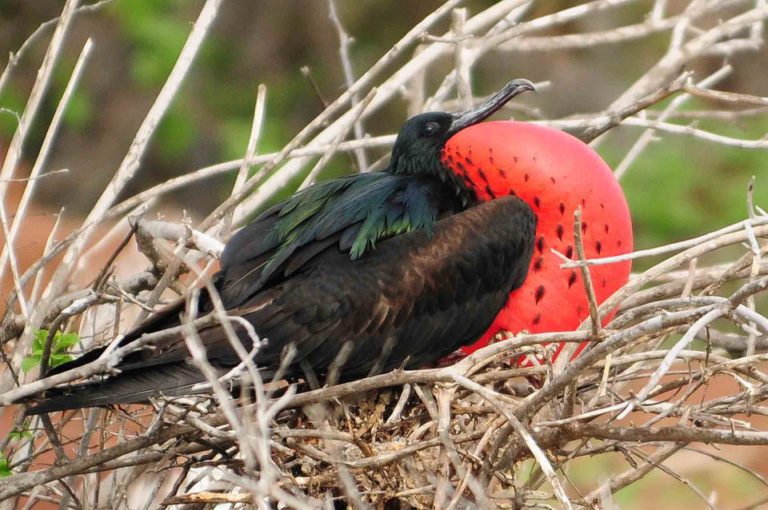
- Magnificent Frigatebird: Males inflate their bright red throat pouches during mating season to attract females.
- Galapagos Penguin: The only penguin species to live north of the equator, adapted to the islands’ unique environment.
- American Flamingo: Vibrant pink birds that thrive in salty lagoons, feeding on small crustaceans.
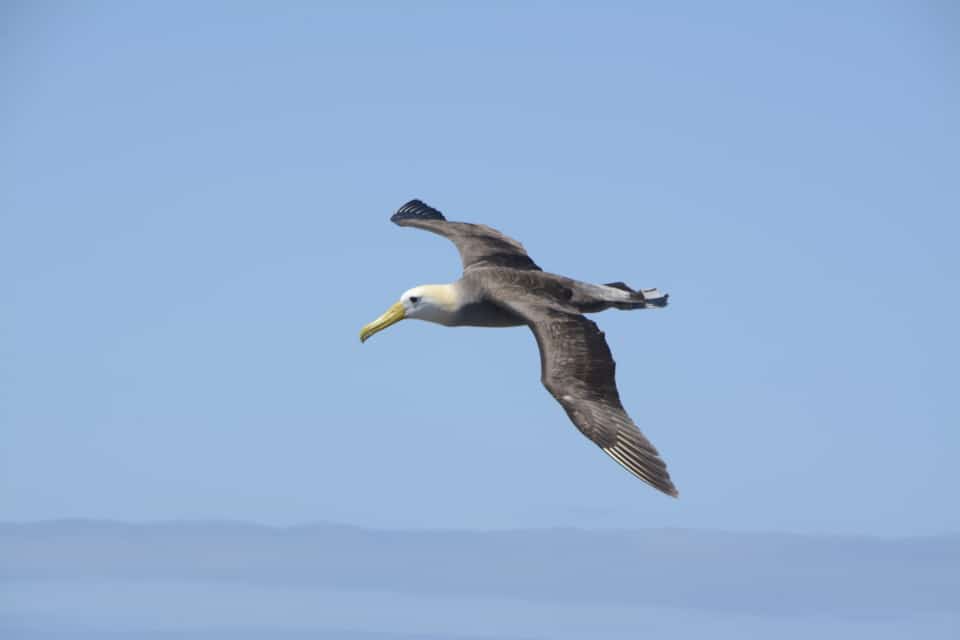
- Waved Albatross: Large seabirds with an impressive wingspan and fascinating courtship rituals.

Darwin’s Finches: The Birds that Inspired Evolution
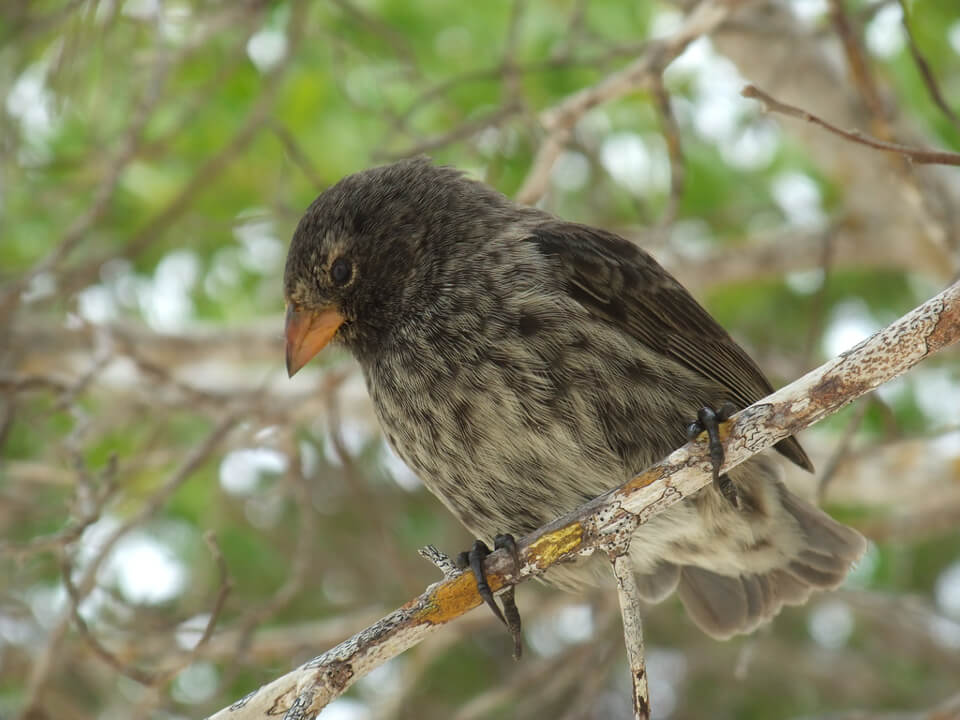
In the beginning, they were just finches. Plain, small, easy to overlook. But when Charles Darwin visited the Galapagos Islands in 1835, he observed that finches varied from island to island. Their differences, especially in beak size and shape, were one of the leading threads that inspired him to develop his theory of natural selection. Each beak, it turned out, was a tool shaped by survival; some of which were chisels for cracking seeds, others were pliers for grasping insects, and some forceps for sipping nectar.
Today, these Galapagos birds are known as Darwin’s finches. There are about 13 to 15 species across the islands, each adapted to specific food sources, such as seeds, insects, and nectar. Studying these finches provides one of the clearest examples of evolution in action and highlights the importance of biodiversity in isolated environments.

Best Islands for Birdwatching
Not all islands in Galapagos are equal when it comes to the wildlife they offer. Some hide their treasures well, while others flaunt them like pirate loot under the equatorial sun. Don’t be mistaken, though: Wherever you go in Galapagos, you’re sure to be dazzled by the abundance of wildlife and otherworldly landscapes. Nevertheless, here’s a really quick look at some of the top islands in the Enchanted Isles for spotting Galapagos birds:
- Genovesa Island (otherwise known as “Bird Island”): A natural amphitheater of seabirds. Red–footed boobies, frigatebirds, and storm petrels are found swirling the skies and ambling around on land here.
- Española Island: Home to the only breeding colony of waved albatrosses, where gangly courtship dances unfold against a backdrop of stunning cliffs.
- North Seymour Island: Here, frigatebirds wage aerial battles for the skies, puffing up their throats like fire-breathing dragons.
- Floreana Island: Known for sightings of the rare Floreana mockingbird, vibrant American flamingos in the lagoons, and active blue–footed booby colonies along the coast.
- Fernandina Island: The best place to see flightless cormorants, along with Galapagos hawks and marine iguanas along the rugged coastline.
- Bartolome Island: A great spot to observe Galapagos penguins up close, often seen swimming along the shores or resting on the rocky outcrops.

The Role of Galapagos Birds in Ecosystem Conservation
Galapagos birds are not just beautiful curiosities but are in fact vital engineers of life itself and critical to the health of the islands’ ecosystems. They help pollinate plants, control insect populations, and spread seeds across different habitats. Seabirds, such as boobies and cormorants, also help support marine life by maintaining balanced fish populations.
However, many bird species face some rather serious threats, including habitat loss, invasive species, and climate change. Luckily, conservation efforts that focus on protecting native bird populations through habitat restoration—along with invasive species control and strict visitor regulations—have all come together to step in and help keep Galapagos birds flourishing.
Make no mistake: Preserving the birds of the Galapagos is a crucial key to maintaining the islands’ overall environmental balance!
The Enduring Charm of Galapagos Birds
From the acrobatic dives of the boobies to the quiet elegance of flamingos wading through lagoons at sunset, Galapagos birds offer insights into a world where nature still operates much as it did thousands of years ago. On top of that, a visit to Galapagos allows you to experience it more closely than ever before, without scaring away the wildlife in the process!
Simply put: Seeing birds in the Galapagos is a wholly different experience compared to most other places. Given that they evolved with very little predators and, consequently, little notion of having to fear humans, many bird species in the Enchanted Isles allow visitors to get remarkably close, offering a rare opportunity for observation!
For travelers, the birdlife of the Galapagos provides a powerful connection to the wild and a deeper appreciation for the importance of conservation. So, don’t hesitate to come and experience the fantastic Galapagos birds for yourself, visible from just about every place you go in the archipelago!