Skip to content
Birdwatching in Galapagos stands alone in terms of biodiversity and bird sighting opportunities. The archipelago’s 20 islands, more than 50 islets, and around 250 large rock formations have made a home for a huge variety of avian life.
Birders should also realize that birdwatching in Galapagos is different from in a rain forest. On the islands, birds, who have evolved without threats from natural predators, are approachable. They do not scare easily, and it is possible to observe them from close distances and for long periods of time. Even if you are not a keen birdwatcher now, the close contact that you can have with birds on the Galapagos will help you become one!

Diego Zapata

Rosa Mena

Sandy Lara
Diego Zapata
Rosa Mena
Sandy Lara
Birds to Keep An Eye Out For While Birdwatching in Galapagos
The most iconic birds of the Galapagos Islands await for you!
Galapagos Albatross
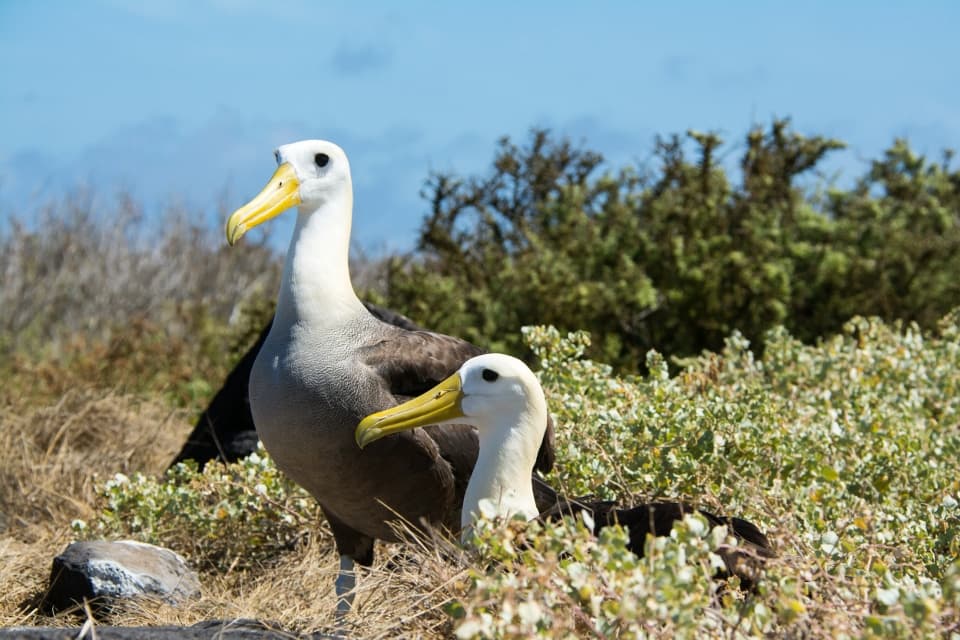
Albatrosses are the skies’ most elegant fliers. These creatures can stay gliding in the air for months at a time without touching land. To spot the Galapagos Albatross you should visit Española Island, nearly the only place where these large birds nest, between late April and early December.
Red-billed Tropic Bird
One of the most elegant and impressive seabirds in Galapagos, red-billed tropicbirds are easy to identify because of their striking coral red bills. They also have a black stripe across their eyes and long white tail feathers.
Tropicbirds are skilled fliers and divers. They feed far out at sea where they are able to dive for fish and squid. When they return to shore they are able to land expertly in small crevices along rocky cliffs. These birds are easiest to observe in the afternoons. They nest on Española, Genovesa, and South Plaza Islands.
Blue-footed Booby
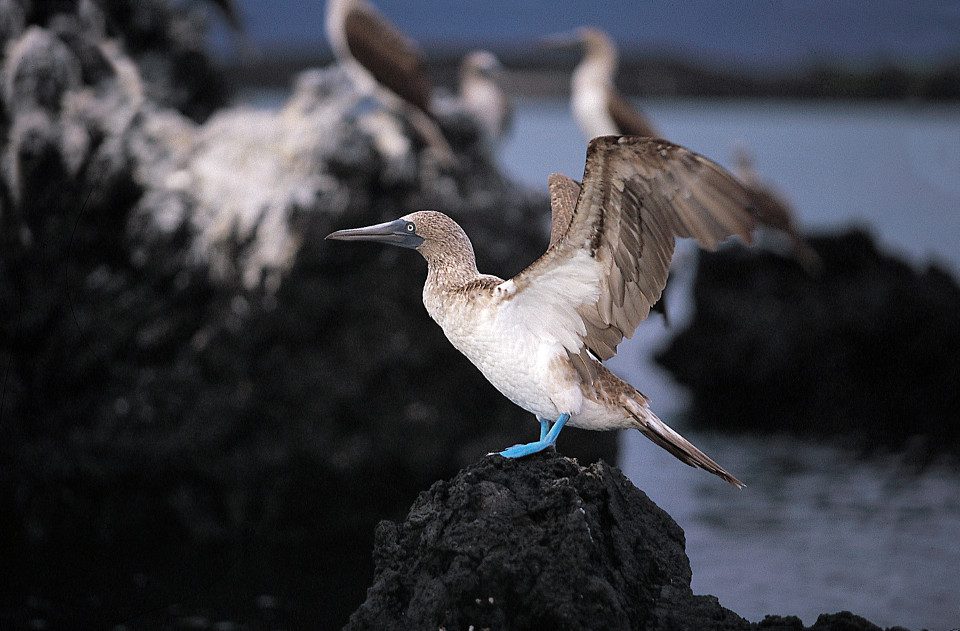
Perhaps the most iconic of the Galapagos bird species, the attraction of the blue-footed boobies is evident from its name. The shade of a boobies’ blue feet indicates the health of male individuals and is a factor in mate selection. (Turquoise blue is the most desirable.)
Blue-footed boobies are known to frequent numerous islands and visitor sites, but the most important breeding colonies are on Española and North Seymour Islands.
American Flamingos
There are only just over 300 of this species left, but it’s possible to see them if you go to the right place. You’re likely to see Galapagos flamingos at Cormorant Point on Floreana Island and Bachas Beach on Santa Cruz.
In addition to their brilliant pink color, you can appreciate these birds for their fascinating biology. For example, both male and female flamingos feed a kind of glandular milk to their young.
Galapagos Short-eared Owl
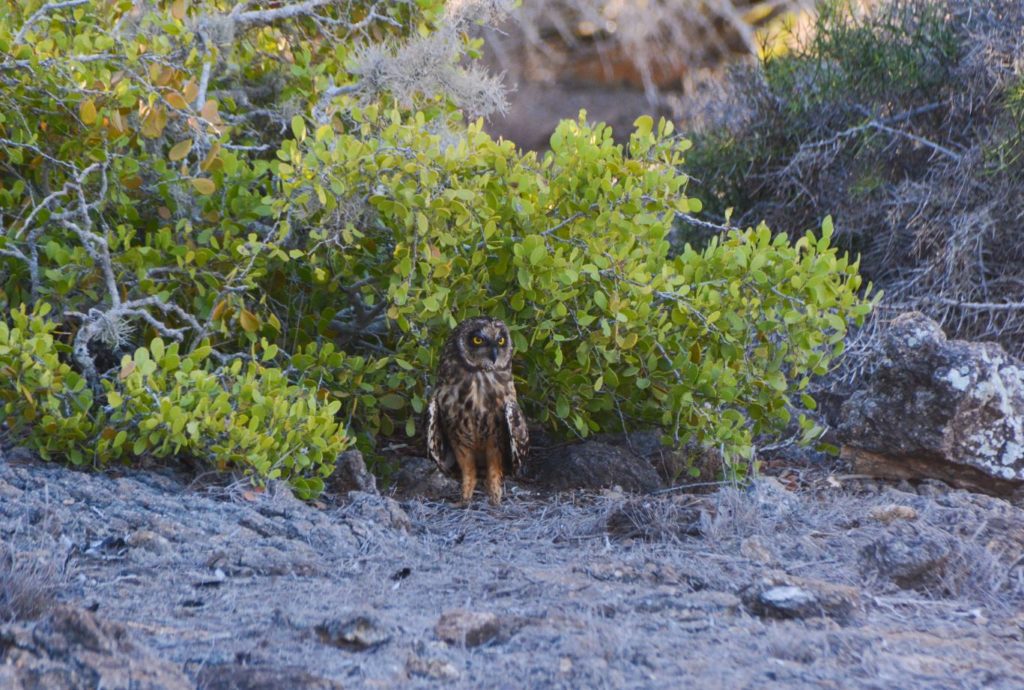
This is a subspecies of the short-eared owl, which is found all over the world. Due to a shortage of rodents on the islands, Galapagos owls have adapted to eat lava lizards. The short-eared owl has even adapted to hunt during the day so as to avoid competition with its fellow bird of prey, the Galapagos hawk.
You are most likely to see Galapagos short-eared owls on Genovesa Island.
Swallow-tailed Gull
The world’s only nocturnal gull can be found here in the Galapagos Islands. They feed at night, but you can spot them during the day along rocky cliffs of Genovesa, Española, San Cristobal, and Plazas Sur.

Javier Garcia
Eduardo Silva

Carolina Escobar
Javier Garcia
Eduardo Silva
Carolina Escobar