Skip to content
People travel to the Galapagos Islands from all over the globe for a chance to see fascinating wildlife. A close-up encounter with the Galapagos marine mammals, although not as popular as reptiles and birds, could easily become one of the most rewarding wildlife encounters for visitors.

Diego Zapata

Rosa Mena

Sandy Lara
Diego Zapata
Rosa Mena
Sandy Lara
Galapagos Marine Mammals Are Some of the Most Captivating Animals
The islands that comprise the Galapagos archipelago are located some 600 miles west of Ecuador. All animal life on the Galapagos Islands arrived from someplace else hundreds of centuries ago. Smaller animals floated in on logs or other debris, and Galapagos bird species were most likely to fly out to the ocean or get blown off course and wound up on the archipelago. Galapagos marine mammals are unsuited for making these types of long journeys because they can’t tolerate excessive exposure to sunshine, and they require plenty of fresh water. Unsurprisingly, there are few mammals on the Galapagos Islands.
Galapagos marine mammals in the archipelago are limited to sea lions, fur seals, whales, and dolphins. Some of the species are endemic, meaning they are found on the archipelago and nowhere else, while others are native animals that live on the islands but also in other parts of the world. In the Galapagos, only the sea lions and fur seals are endemic. They also happen to be two of the islands’ top draws.
Even though there aren’t many kinds of Galapagos marine mammals in the archipelago, travelers get to experience the ones that do exist in a way they wouldn’t anywhere else. Due to the isolation in which the wildlife evolved, and the fact that mammal land predators (carnivores) are absent in the islands, most species gradually lost the instinct of fear, and so animals seem completely oblivious to the presence of man. Species here don’t bother to hide or keep their distance from humans.
Galapagos Sea Lions
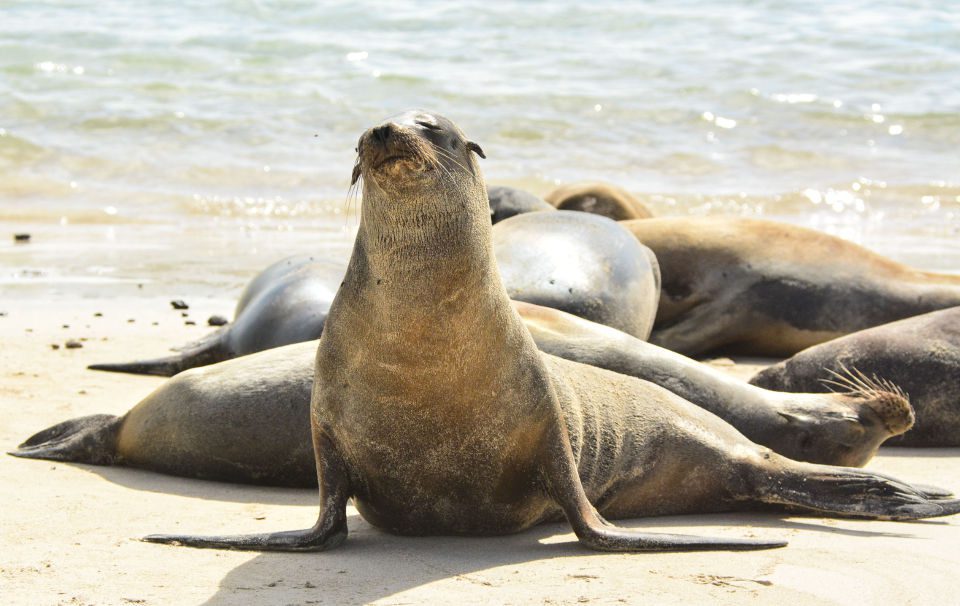
Fortunately for vacationers, Galapagos sea lions are not limited to a particular island the way some of the other endemic species are. They can be found throughout the archipelago, on both the inhabited and uninhabited islands, and they have a population that numbers in the tens of thousands. This, coupled with their social and inquisitive nature, makes them a favorite of photographers and visitors of all ages. They enjoy lolling about on shorelines, beaches, docks and even seaside park benches. If there’s an official bucket list top ten, then snorkeling with playful Galapagos sea lions, especially the pups, must surely be on it.
In order to protect the wildlife, Galapagos National Park regulations require that visitors not get too close to the animals. No such rule applies to the fauna itself, which just out of pure curiosity enjoy coming right up to sightseers, and intimate encounters with curious sea lions are a frequent occurrence.
Galapagos Fur Seals
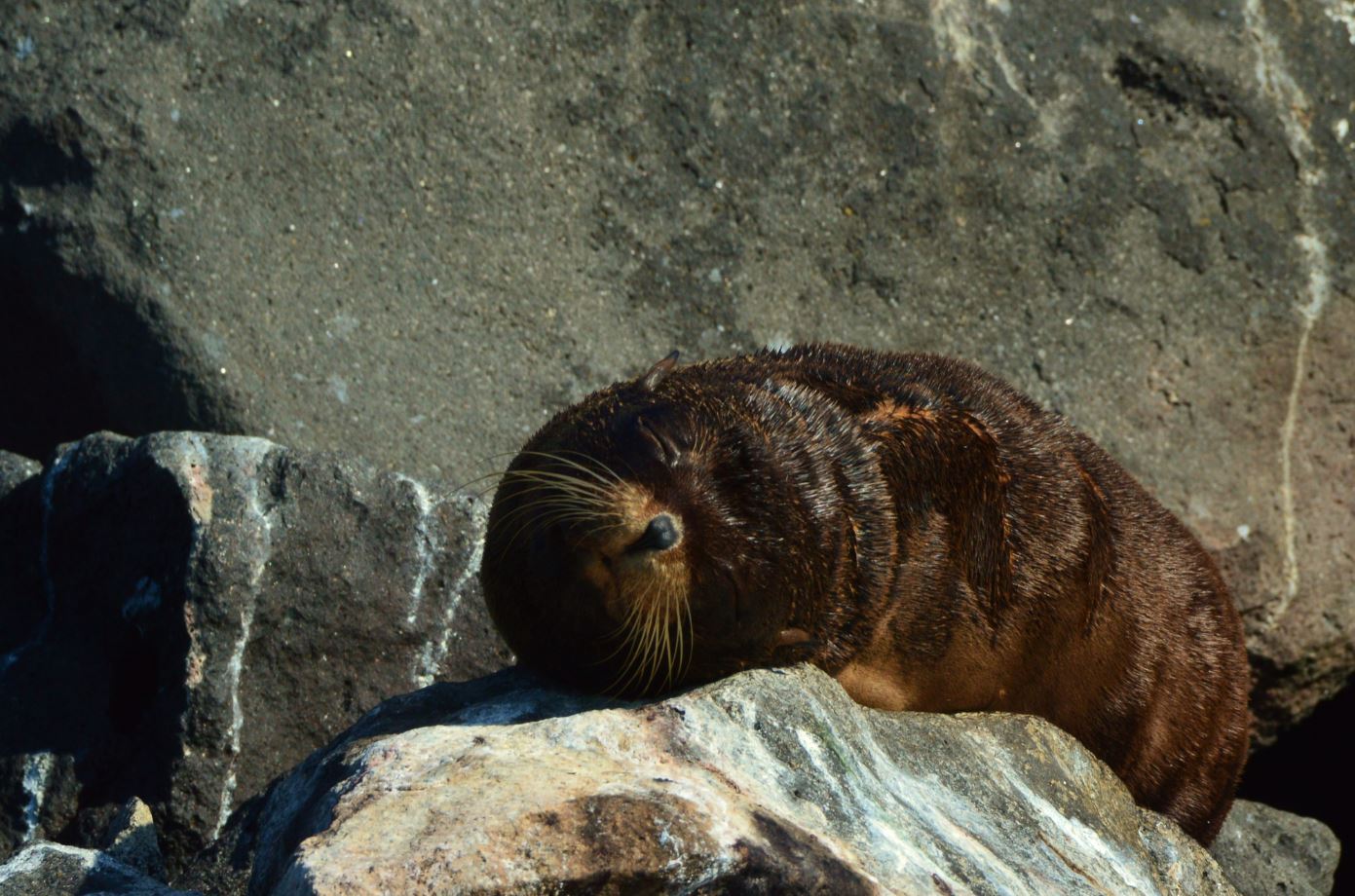
By comparison to the sea lions, it’s harder to spot Galapagos fur seals. This is due to different behavioral patterns rather than low population figures. It’s true that fur seals were almost hunted to extinction for their pelts, but their numbers have recovered quite nicely. Unlike sea lions, which feed at different times of day, fur seals tend to feed at night. They also prefer rugged, rocky shores where there are less accessible places for visitors, and they don’t tolerate heat as well as sea lions, so they often take shelter in shady areas where it’s harder to notice them.
Many people are understandably confused as to the differences between fur seals and sea lions and the way to tell them apart. This is, in fact, one of the questions the trained naturalist guides that accompany higher-end tour ships such as Yacht La Pinta, Yacht Isabela II or the Santa Cruz II can answer. Visitors who choose a Galapagos cruise for their vacation as a way to see the islands often do so because they want an expert with them to point out and describe the wildlife they’re observing.
Now, here’s a test for you: pictured in this photograph there are the two types of sea lions that inhabit the Galapagos. Can you see any differences between them? Can you tell which one is a Galapagos sea lion and which one is the Galapagos fur seal?

Javier Garcia
Eduardo Silva

Carolina Escobar
Javier Garcia
Eduardo Silva
Carolina Escobar
Whales
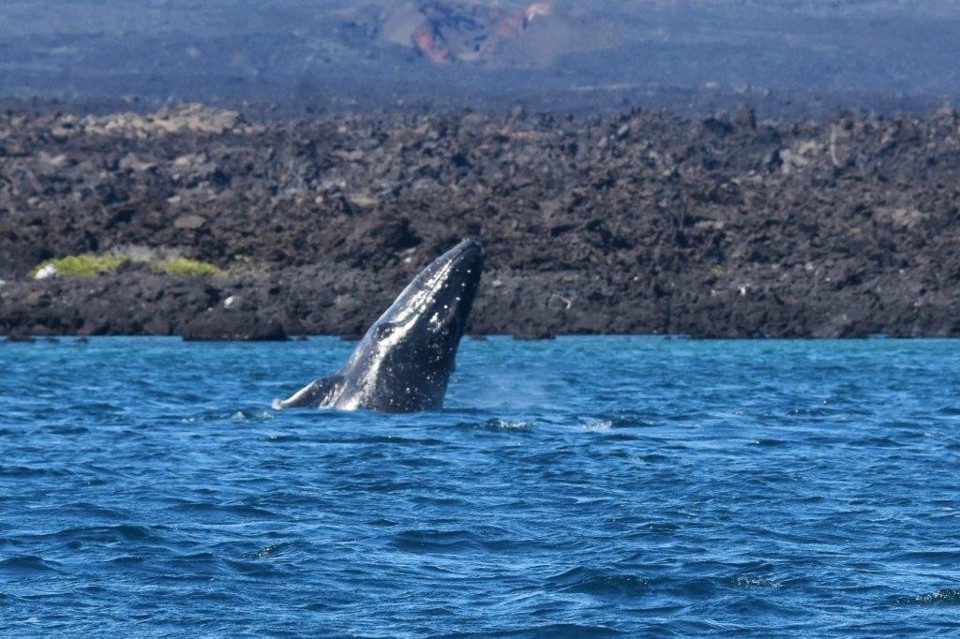
It’s possible to see some species of whales all year long in the Galapagos, as many different species swim around or migrate through this region’s waters. Sperm whales, Blue whales, Bryde’s whales and Minke whales have all been spotted in the archipelago’s waters. Because they tend to breach and make a dramatic splash back into the sea, Humpback whales are some of the easiest whales to identify. The two groups of whales do pass by the Galapagos Islands: baleen whales (mysticeti) and toothed whales (odontoceti).
Dolphins
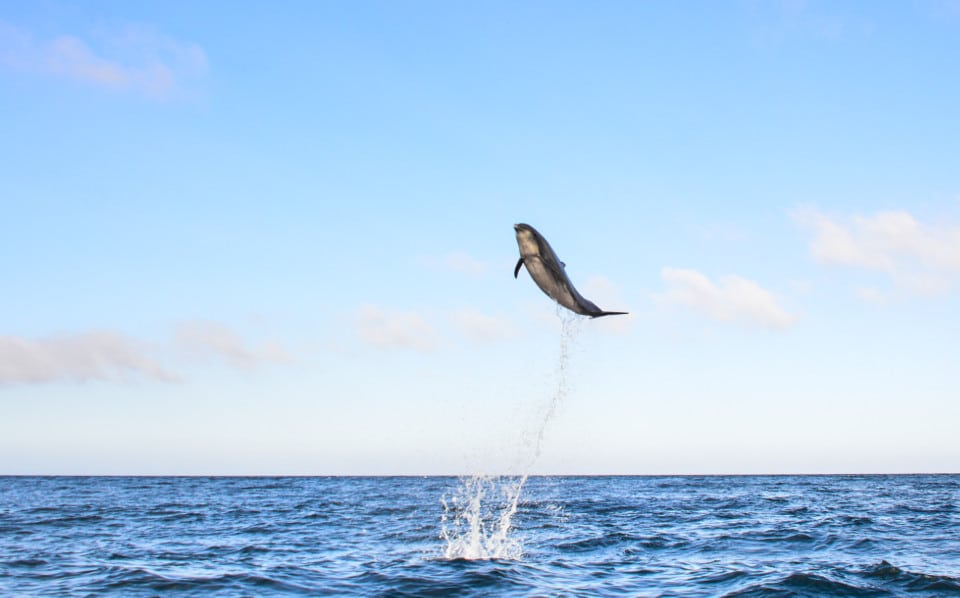
Groups of dolphins, numbering anywhere from 20 to several hundred, are not uncommon sights in the islands. The two types of dolphins that visitors can expect to see are the Common White-bellied dolphin and the Bottle-nosed dolphin. These animals like to race alongside larger ships, and their social nature often leads them to swim up close to kayaks and Panga boats. Not everyone is aware that Orcas and Pilot whales are actually a type of dolphin, but they are, and Orcas in particular, although unpredictable when to be seen, can be expected in any area of the archipelago.
Bottle-Nose Dolphins and Pilot Whales off the Western Region of the Galapagos
Tips for Viewing Galapagos Marine Mammals
All 12 months of the year are considered as good times to visit the archipelago, but those visitors interested in maximizing their chances of spotting Galapagos marine mammals should consider a trip sometime between June and November. This time of year is great for whale-watching. Migratory species such as the Humpback whale are only present during these cooler months. Sea lions are present all year, but sea lion pups are only born in the month of August, and whole nurseries full of them learn to swim around November. The annual mating season for sea lions and fur seals starts in September and October; male sea lions can sometimes be seen along the shoreline fighting over the females.
Tour routes that favor the western portion of the Galapagos islands near Isabela and Fernandina are excellent choices for those hoping to spot whales and dolphins. For the opportunity to observe fur seals, which is more difficult compared to sea lions, it’s best to consider a Galapagos ship itinerary that includes Santiago, Isabela or Genovesa Islands.
Would you like to read more tips for a great journey in Galapagos?
Read our 3 Main Tips to Choose the Best Galapagos Expedition Tour
Blog Reviewed & Edited by: Francisco Dousdebés
All Images: Francisco Dousdebés, Dennis Ballesteros.