Skip to content
All cruises in the Galapagos are dedicated to maintaining an environmentally friendly approach. In our contemporary world, every ship is authorized to traverse the waters of the marine reserve, having received official endorsements from the Galapagos National Park, the Maritime Authorities, and the Ecuadorian Ministry of Tourism. This triple-verification system ensures that all ships adhere strictly to the environmental rules and regulations set forth by these organizations.
This requirement mandates that all ships in the Galapagos implement strategies promoting: a.) conservation of water and energy, b.) waste recycling and treatment, c.) acquisition of locally sourced products, and d.) hiring of local island residents, offering them equitable wages and professional development opportunities.
Diego Zapata

Rosa Mena
Sandy Lara
Diego Zapata
Rosa Mena
Sandy Lara
In other words, no environmentally bad ship currently exists in Galapagos. The authorities have approved each boat, and it comes with highly trained and professional personnel who are incredibly conscious about the environment they’re navigating through.
The Galapagos expedition cruise does all of this and then some. Social responsibility and conservation efforts for sustainable tourism have been a massive part of what makes us different.
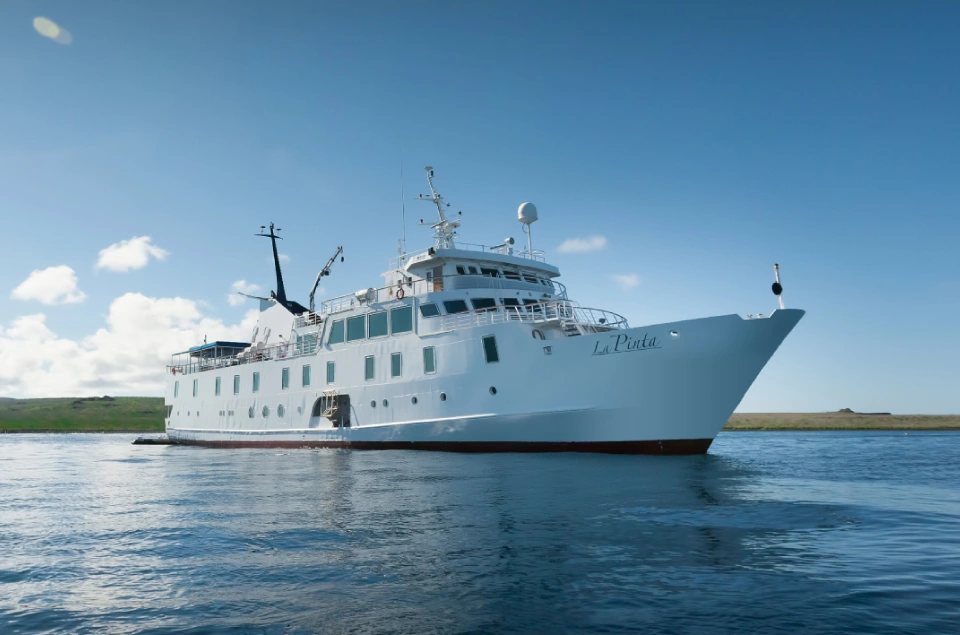
Environmental consciousness is paramount for larger and mid-sized vessels in the Galapagos, such as our Expedition Vessels. Why is this so? Larger and mid-sized ships, often called multi-guided vessels, possess several advantages in protecting the delicate Galapagos environment, especially compared to their smaller, single-guided counterparts.
The Bigger, the (Environmentally) Better
Expedition vessels come with their own black and grey water treatment plants, which help to keep the delicate Galapagos waters clear of any toxic form of organic human waste. Compost produced in our kitchen is ground up into a fine pulp before being released into waters that are far beyond any visitor sites and/or marine life “hotspots.”
Something else: look at the number of anchors we have for our 48 to 90 guests versus how many are dropped with smaller, single-guided vessels. That’s right, just one anchor!
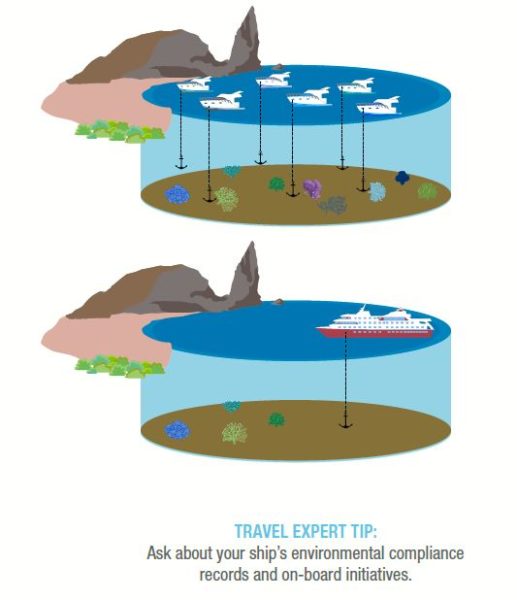
At first glance, it may seem counter-intuitive, but having fewer people aboard a smaller boat can increase the vessel’s environmental footprint in the Galapagos. The reasoning? The Galapagos National Park allows up to six multi-guided, smaller vessels at each visitor site. This equates to six anchors being dropped onto the delicate ocean floor of the Galapagos instead of just one from a larger ship!
Therefore, it’s prudent to question any tour operator you’re considering in the Galapagos about the environmentally friendly initiatives they’ve implemented on their vessels and any sustainability awards they’ve achieved.
Our Expedition Vessels engines are four-stroke, signifying they offer greater efficiency in terms of the power they generate compared to the fuel they consume. Moreover, the energy used is non-bunker fuel/fuel oil, less environmentally damaging.
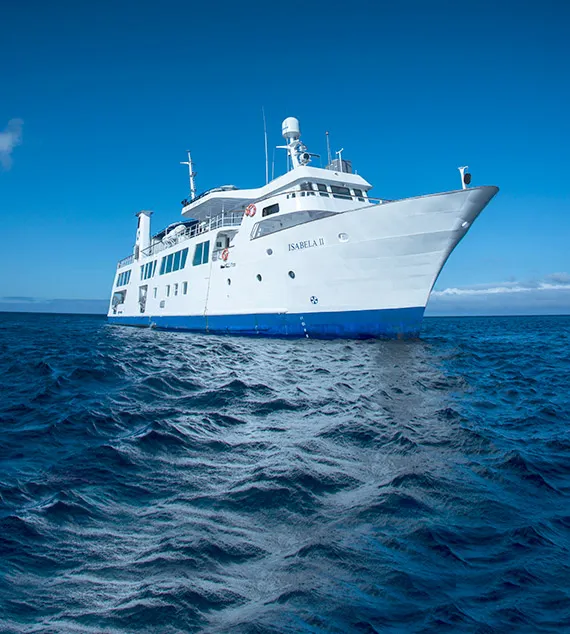
Our waste management is also incredibly advanced. Did you know that waste management in the Galapagos audits how much non-organic trash you bring in as an expedition vessel? This ensures that Galapagos vessels aren’t throwing away any non-organic waste overboard! At the waste management centers in Galapagos, waste is sorted and selected for recycling.
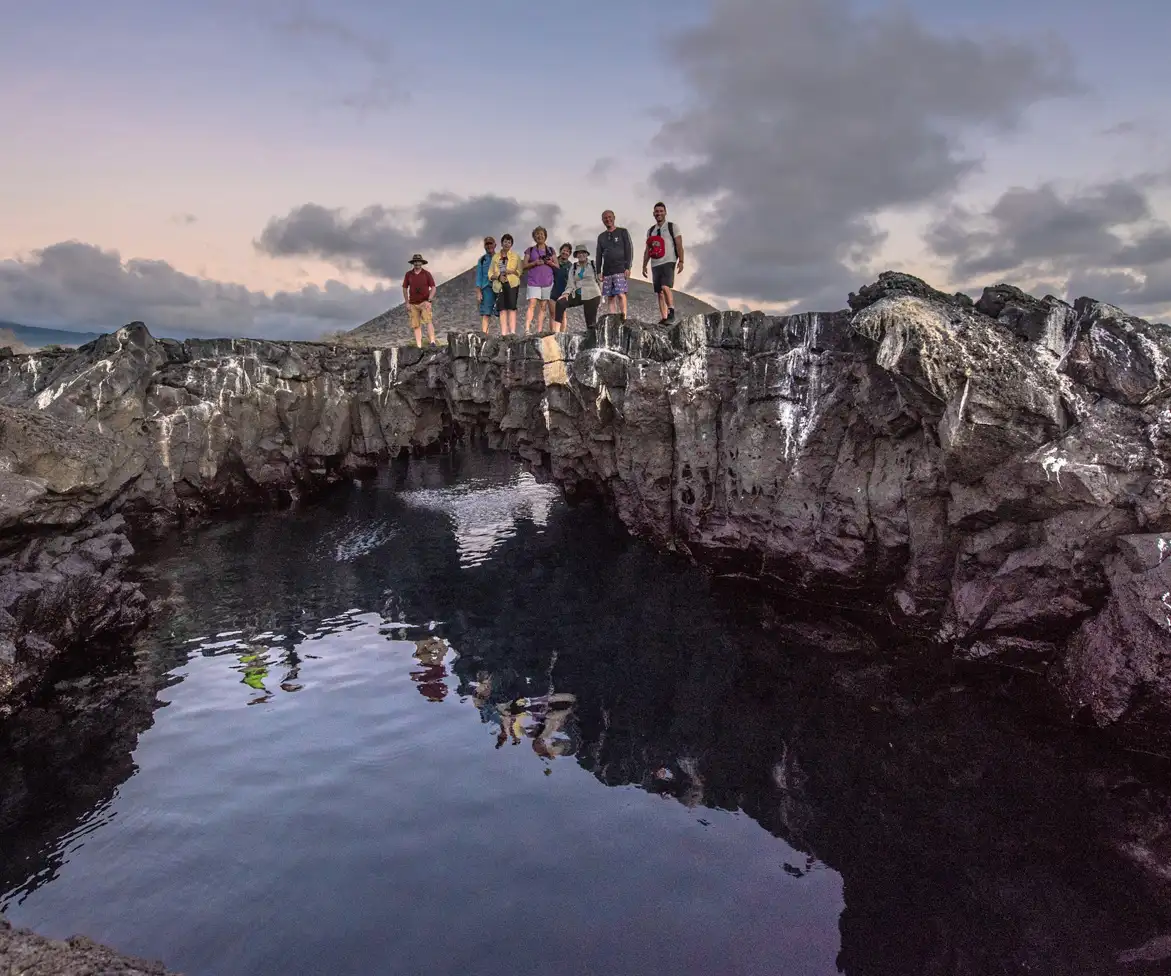
Thinking Locally to Foster More Sustainable Cruises in Galapagos
A small note while we’re on the topic of food: We always make it a point to avoid wasting it. How? It’s in the details. Regarding food on a Galapagos cruise, we optimize and make our resources as efficient as possible by kindly requesting that our guests order what they want for dinner at lunchtime. The food we make aboard is fantastic and even more incredible because our guests help us not to be wasteful. We do this by being conservative with what we prepare at dinner, and it’s all done by simply showing them the dinner menu early on in the day and asking them that simple question.
In Galapagos, we’re all a part of sustainability efforts! So, now that you know how much effort goes into it, book your sustainable cruises in Galapagos with us today!
Javier Garcia
Eduardo Silva
Carolina Escobar
Javier Garcia
Eduardo Silva
Carolina Escobar